 Automotive Film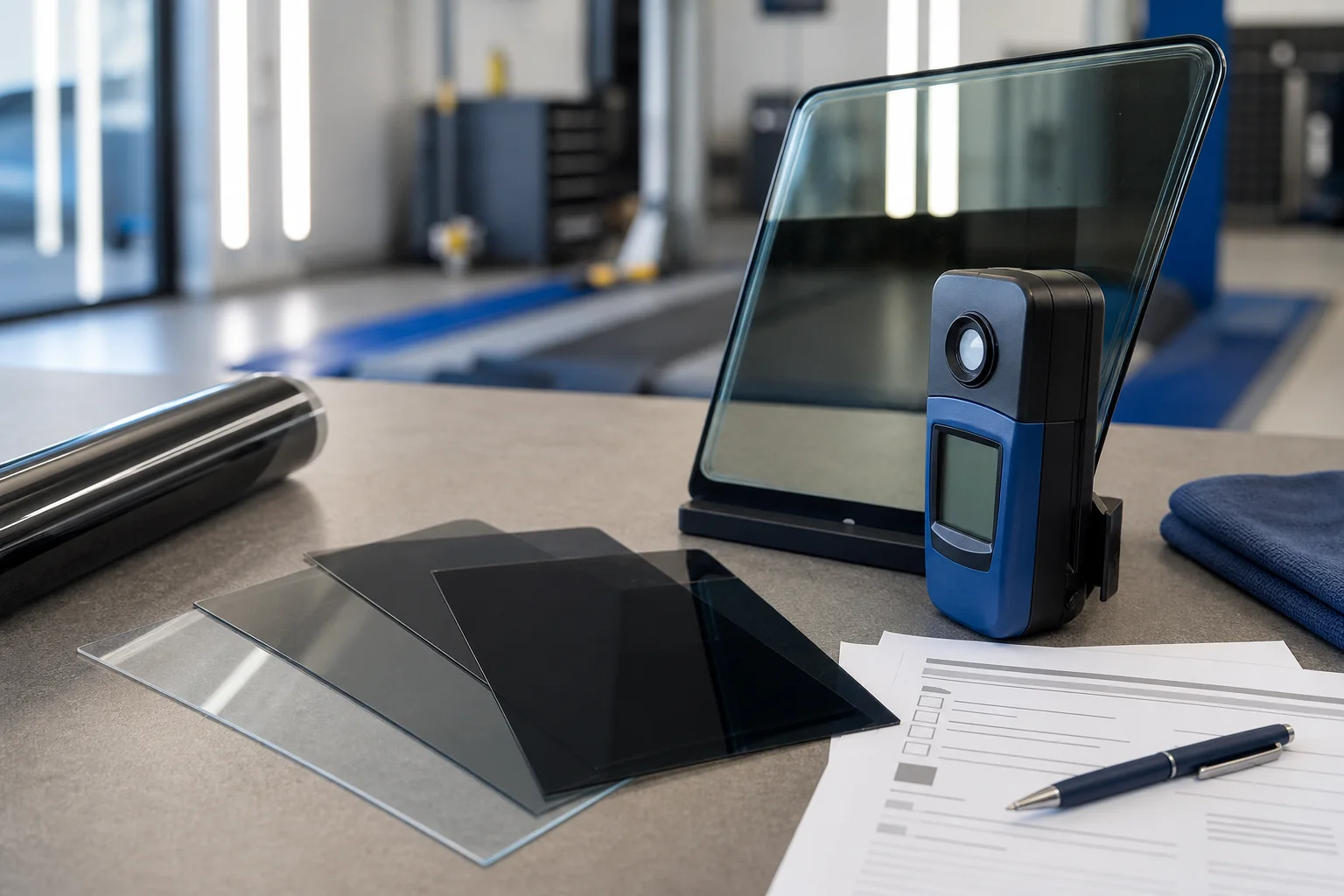
Window-film buyers often start with a roll label—5%, 20%, 35%, 50% or 70% VLT—and then ask which number is “legal.” That question is incomplete. Regulation may apply to the finished glass-and-film system, may distinguish the windscreen from front and rear side windows, may treat passenger cars and multipurpose vehicles differently, and may also restrict reflectance or special visual effects. A film specification is therefore an input to compliance, not a compliance certificate for every vehicle and market.
This guide turns that regulatory reality into a procurement workflow. It is not legal advice and it does not claim that any KAVRON product is automatically approved for a particular jurisdiction. Distributors and installers should verify the current rule with the responsible local authority before selling or installing a configuration.
The Same VLT Label Does Not Produce the Same Installed Result
Visible light transmission describes how much visible light passes through a material or system. The vehicle glass already has its own optical characteristics before aftermarket film is applied. The completed window can therefore transmit less light than the film sample measured by itself. Glass condition, meter method and measurement tolerance can add further variation.
For purchasing, this leads to a simple rule: obtain nominal film data for product comparison, but approve a market SKU only after measuring representative film on representative vehicle glass. Record the meter, glass location, vehicle type, sample batch and test conditions. Do not convert a supplier's nominal roll value directly into a universal legal claim.
Two Official Rules Show Why Markets Need Separate Matrices
The UK government states that, for vehicles first used on or after 1 April 1985, the front windscreen must allow at least 75% of light through and the front side windows at least 70%. It states that rear windscreens and rear passenger windows are not subject to those particular tint limits. The guidance also makes clear that enforcement is based on measurement and that fitting or selling non-compliant glass can carry consequences.
Virginia's 2026 code uses a different structure. Subject to its conditions and exceptions, it sets a 50% minimum total light transmittance for front side windows and 35% for rear side and rear windows, limits light reflectance to 20%, and prohibits holographic or prism effects. It separately addresses windshield film and vehicle categories. A distributor using one “global legal tint” chart would erase these material differences.
At the US federal level, FMVSS No. 205 addresses automotive glazing safety and transparency. A June 2026 final rule removed obsolete regulatory text relating to older glazing standards; it should not be marketed as blanket new permission for aftermarket tint. State installation and vehicle-use rules still require separate review.
Build a Market-by-Position SKU Matrix
Start with vehicle window positions, not roll shades. Create rows for windscreen, front side, rear side and rear window, then add columns for passenger car, multipurpose vehicle or other locally relevant categories. For each cell, record the applicable minimum installed VLT, reflectance limit, allowed shade band, exemptions, labeling requirements and the official source with its access date.
Next, map products to three commercial statuses:
- Approved for local evaluation: a sample has passed the distributor's documented installed-glass test for a defined position and vehicle group.
- Restricted application: the shade may suit rear glazing or exempt vehicle categories but should not be promoted broadly.
- Decorative, export-only or off-road channel: the product is not positioned as road-legal in that local market.
This is safer than treating a shade number as the SKU name. A “light front-side candidate” or “rear privacy series” gives sales teams a role-based description while the technical sheet retains the measured nominal data.
Separate Heat-Rejection Selling From Darkness
Customers often associate a darker appearance with stronger heat rejection, but product selection should keep visible-light transmission, solar-energy performance, UV transmission, reflectance, color stability and signal compatibility as separate evaluation fields. A distributor should not imply that every dark film has premium thermal performance, or that a high-VLT film automatically satisfies a local rule after installation.
Request test methods and complete data rather than one headline percentage. Compare like with like, confirm whether figures describe film alone or film on glass, and retain the tested construction and batch. This makes it easier to explain why two films with similar appearance may occupy different positions in the range.
Use a Five-Part Distributor Control File
- Rule record: official link, jurisdiction, vehicle class, window position, threshold, exceptions and review date.
- Product record: series, shade, nominal VLT, reflectance, construction, batch and supplier test method.
- Installed test: representative glass, meter identification, readings, photos and operator.
- Sales control: approved claims, restricted uses, catalog wording and dealer briefing.
- Change review: scheduled regulatory checks and a process for withdrawing obsolete labels or charts.
The resulting file is useful beyond compliance. It reduces wrong-SKU shipments, gives installers a repeatable handover process and helps private-label buyers keep cartons, swatch books, technical sheets and sales training consistent.
KAVRON's Procurement Conclusion
The useful unit of purchase is not simply a tint percentage. It is a documented combination of target market, vehicle class, glass position, installed measurement and approved sales claim. Distributors should keep enough shade choice to serve local demand, but avoid stocking a large global palette before this matrix is complete.
For a new market, begin with official rule verification, a small shade set and installed-glass testing. Expand only when dealers can identify where each SKU belongs and can measure the completed installation. This approach protects inventory quality and sales clarity without pretending that a factory can issue one universal legal declaration.
Sources and Scope
Regulatory facts in this article come from the UK Government's tinted-window guidance, the 2026 Code of Virginia § 46.2-1052, and the US federal glazing framework in 49 CFR § 571.205 together with the June 3, 2026 Federal Register final rule. The procurement matrix and commercial recommendations are KAVRON's analysis of how distributors can operationalize those differences. Rules can change and other jurisdictions may use different thresholds or exemptions.
Continue with our automotive window-film technology guide, compare the ceramic and dyed film decision factors, or review the KAVRON window-film product overview.