 Automotive Film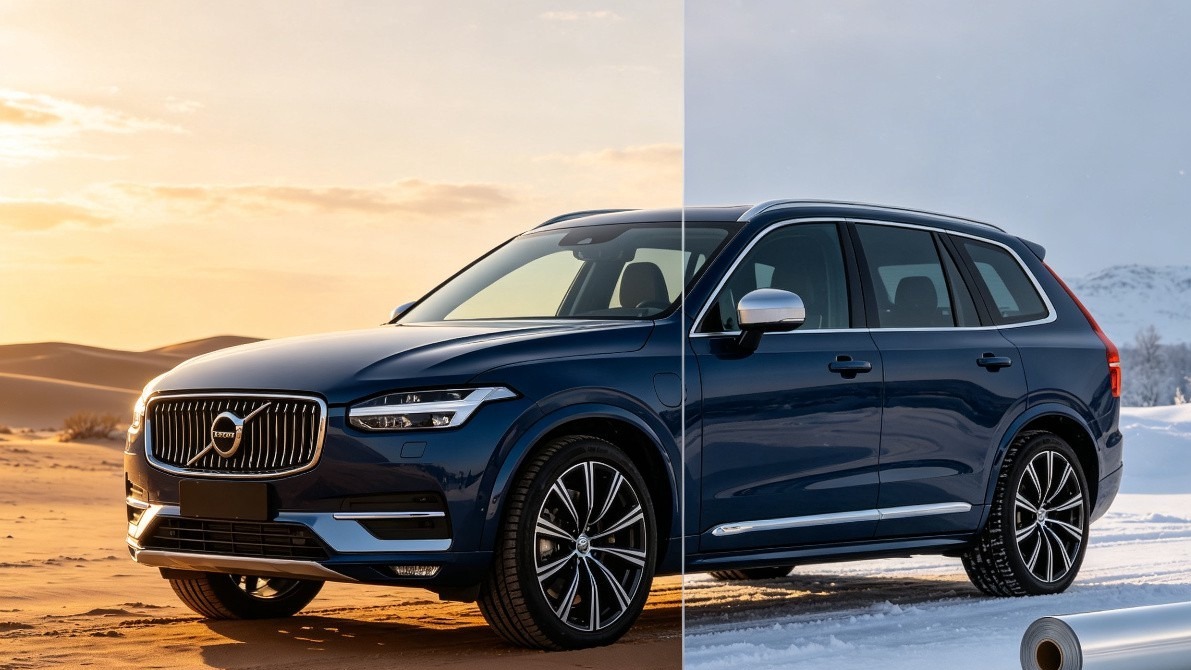
One of the most common mistakes distributors make is sourcing a single film specification for all markets. A 7.5mil glossy PPF with standard hydrophobic coating performs well in temperate Europe but may yellow prematurely in Southeast Asia or become too rigid for winter installation in Canada. Understanding climate-specific formulation is essential for product success and customer satisfaction.
Hot and Dry Climates: Middle East, North Africa, Australia
Regions with extreme heat, intense UV radiation, and sand exposure place unique demands on automotive film:
- Film structure: Harder TPU substrate for better resistance to sand blasting and gravel impact
- Thickness: 8.5mil recommended for high-speed desert driving
- Coating: Enhanced UV-stable coating with anti-stain properties to handle fine dust and sand adhesion
- Adhesive: High-tack PSA that maintains bonding at sustained 60-70°C surface temperatures
- Window film: High IR rejection ceramic or sputter film for cabin heat management
Hot and Humid Climates: Southeast Asia, South America
Humidity, frequent rain, and road grime create a different set of challenges:
- Film structure: Hydrolysis-resistant TPU to prevent degradation in high-moisture environments
- Coating: Hydrophobic top coat for water beading and self-cleaning effect; anti-stain coating to resist acid rain and organic contaminants
- Thickness: 7.5mil standard, 8.5mil for coastal areas with salt exposure
- Adhesive: Moisture-resistant PSA formulation
- Window film: Nano ceramic with high UV rejection to protect interior plastics from tropical sun
Cold Climates: Northern Europe, Russia, Canada
Sub-zero temperatures, road salt, and limited daylight hours require specific adaptations:
- Film structure: Softer TPU grade for easier installation and better conformability at low temperatures
- Adhesive: Low-temperature flexible adhesive that activates properly in cold workshop conditions
- Coating: Salt-spray resistant formulation to handle road de-icing chemicals
- Thickness: 7.5mil standard; 6.5mil acceptable for urban environments with less gravel exposure
- Window film: Clear IR film for windshield to reduce heating load without darkening
Premium Markets: North America, Western Europe
Mature markets with brand-conscious consumers and high installer standards:
- Film structure: High-clarity TPU with minimal orange peel effect
- Coating: Self-healing coating for swirl and scratch recovery; hydrophobic for maintenance ease
- Thickness: 8.5mil for maximum protection positioning; 7.5mil for mainstream professional installer market
- Window film: Magnetron sputter or premium nano ceramic for highest heat rejection
- Color PPF: Metallic, pearl, and chameleon series for luxury vehicle styling
How KAVRON Configures Climate-Specific Products
KAVRON offers climate-customized configurations across all product categories. During the sample evaluation phase, we work with distributors to identify:
- Target market climate profile
- Customer type (wholesale, retail, installer, fleet)
- Price positioning and competitive landscape
- Regulatory requirements (VLT limits, chemical compliance)
Based on this analysis, we recommend the optimal combination of TPU substrate, coating direction, adhesive system, thickness, and roll format.
Sources & References
- QYResearch — TPU PPF Industry Analysis
- Grand View Research — Paint Protection Film Market
- Global Market Insights — Automotive Film Market Size
Get a Climate-Matched Film Recommendation
Tell us your target country or region. We will recommend the right product configuration, coating, and packaging for your market.
Request Climate Analysis