 Automotive Film

A September 5 industry update gives wrap and film shops a useful reason to look beyond the paint. A U.S. House committee-approved vehicle modernization package includes a proposed ADAS Functionality and Integrity Act. The proposal would direct NHTSA to study how common vehicle modifications affect advanced driver-assistance systems and develop data-driven guidance. Vehicle wraps are specifically named among the modifications under discussion.
Two cautions come first. This proposal has advanced toward consideration by the full House; it is not final law. It is also a U.S. legislative development, not a global rule. Still, the business lesson travels well: cameras, radar and other sensors are becoming part of the surface an installer works around.
The car is no longer just paint, glass and trim
A modern vehicle may use a camera near the rear-view mirror, radar behind a grille or emblem, ultrasonic sensors in bumpers and additional cameras around mirrors or body panels. Exact equipment and service requirements vary by make, model, trim and repair procedure. That means an installer cannot rely on a generic internet diagram—or assume yesterday's model is identical to today's.
Film installers do not need to become ADAS engineers. They do need to stop treating every exterior surface as technologically empty.
PPF does not automatically “break ADAS”
It would be irresponsible to claim that any PPF or wrap automatically interferes with a safety system. It would be equally careless to promise universal compatibility without vehicle-specific evidence. Material type, thickness, pigment, metallic content, optical properties, seams and placement can matter differently depending on the sensor and manufacturer instructions.
Windshield protection film deserves particular discipline because forward-facing cameras often view through glass. Front bumper, grille, emblem and mirror areas also deserve a model-specific check before cutting or covering. When manufacturer service information calls for calibration after removal, replacement, glass work or another procedure, a film shop should follow that guidance or refer the work to a qualified calibration provider.
A sensible pre-installation record
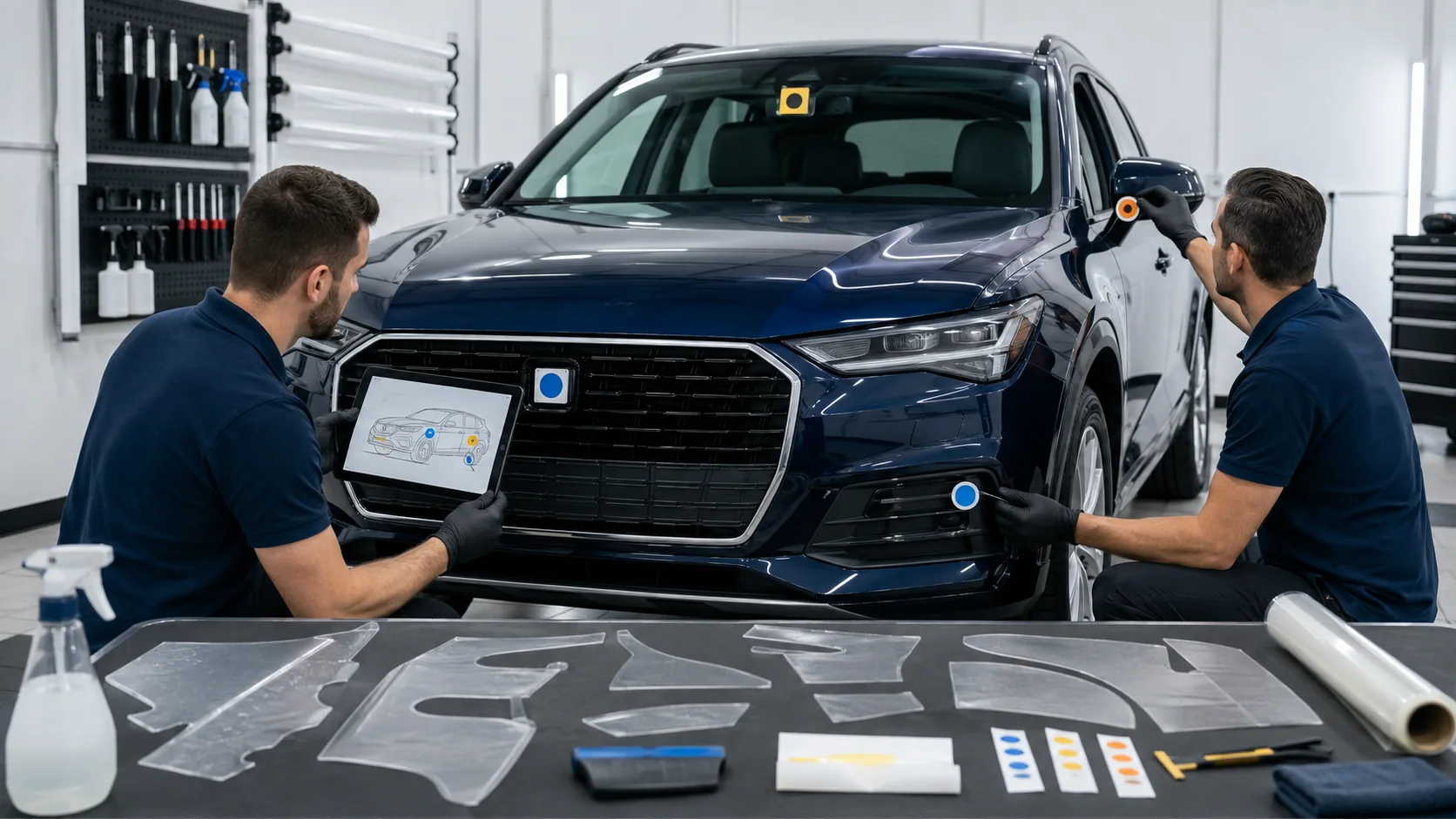
- Identify the exact vehicle: record model year, trim and relevant equipment rather than only make and model.
- Inspect warning status: note dashboard warnings and visible damage before installation.
- Check service information: verify sensor locations and manufacturer restrictions from an authoritative source.
- Mark exclusion zones: keep patterns, seams, coatings and accessories away from areas that must remain unobstructed.
- Record the material: product, batch, thickness, finish and panels covered should be traceable.
- Document handover: note any calibration recommendation, referral or customer instruction.
What distributors and factories should prepare
A distributor should not answer an ADAS question with “our film is clear, so it is fine.” Instead, maintain material data, define the intended application, identify known exclusions and avoid universal claims unsupported by testing. Factories can help by supplying consistent technical sheets and retaining samples by batch. For colored, metallic or optically specialized films, the burden of careful wording is even higher.
Pre-cut software providers and pattern designers also have a role. Sensor-aware pattern notes and model-year distinctions can reduce guesswork, but software should support—not replace—vehicle-specific verification.
My conclusion
The proposed U.S. study is not a reason for panic. It is a sign that the wrap, PPF and safety-technology worlds are finally acknowledging one another. Shops that build a sensor-aware workflow now will be easier to trust later. The best result remains visually simple: the customer sees beautiful film. Behind that simplicity should be a much smarter record.
Sources: PRINTING United Alliance, “Vehicle Modification Bill Advances: What the Wrap Industry Needs to Know,” September 5, 2026, and SEMA's legislative update on the ADAS Functionality and Integrity Act. Legislative status may change. This article is industry commentary, not legal, vehicle-repair or calibration advice; always follow current law and vehicle-manufacturer procedures.