 Automotive Film
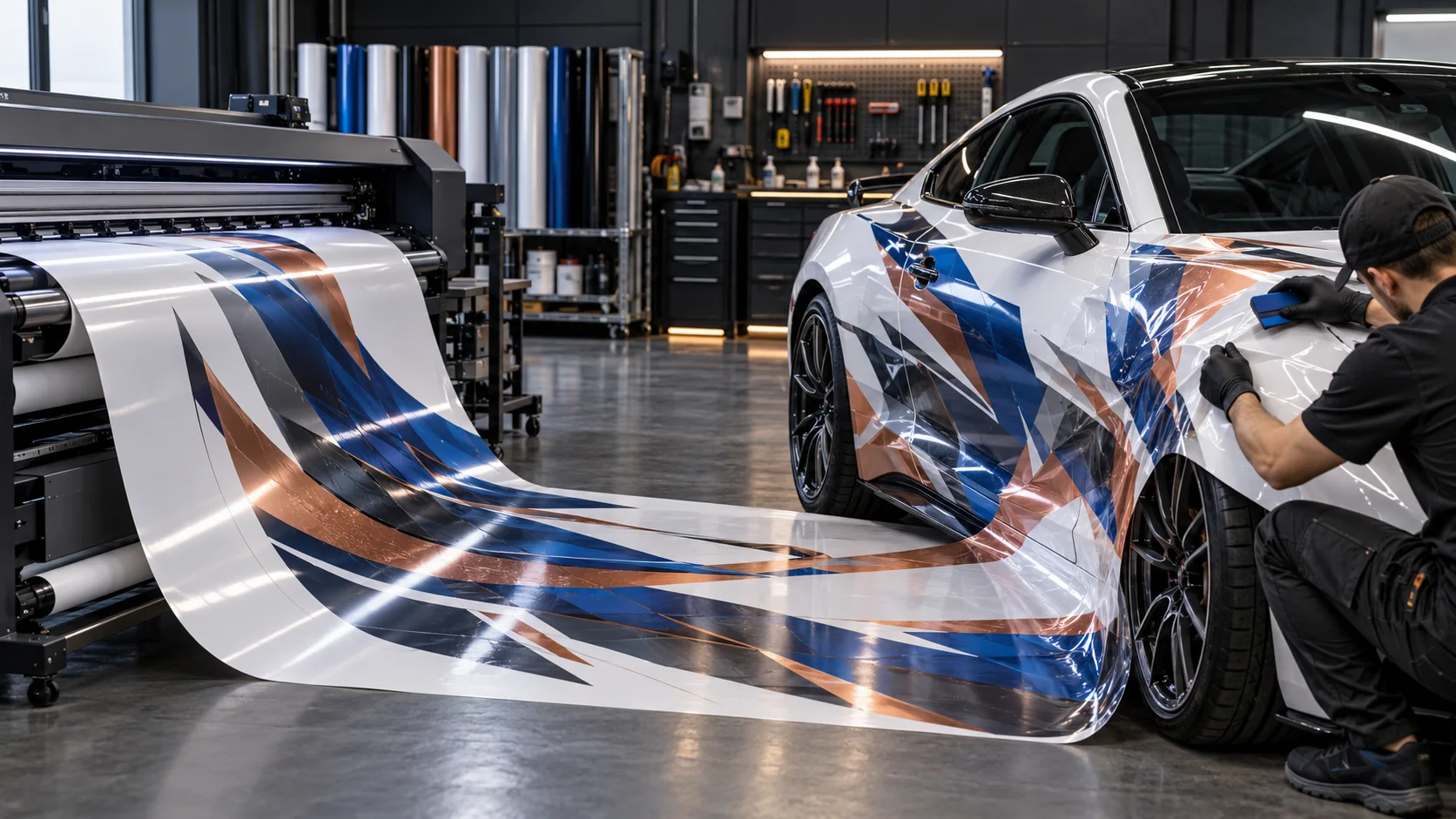
Printable paint protection film is one of the more interesting automotive-film developments this year. Suppliers are now marketing white and clear printable PPF as a way to combine custom graphics with a protective, self-healing film. For wrap shops, that sounds like two services becoming one.
It is an attractive idea: print a one-off design for a private vehicle, create a branded fleet graphic, or give a customer a finish that no stock colour card can provide—while still offering paint protection. But the opportunity is not simply “vinyl printing on thicker film.” The complete system must work after printing, finishing, stretching, installation and real-world exposure.
Printable PPF will not win because it can produce unlimited designs. It will win only when shops can repeat the same print, finish and installation quality without creating unclear warranty responsibility.
Why wrap shops should pay attention
Conventional printable wrap film gives designers freedom but does not provide the same impact protection normally associated with TPU PPF. Stock colour PPF adds protection and a paint-like finish, but every additional colour becomes another inventory decision. Printable PPF may create a middle route: keep a smaller number of printable bases and produce the visual design on demand.
That could be useful for custom vehicles, commercial fleets, dealer editions, motorsport graphics and limited local campaigns. It could also help distributors avoid stocking dozens of slow-moving colours. The commercial value, however, depends on the approved print-and-finish system—not only the base film.
The phrase “printable” is not a complete specification
Before listing a printable PPF, buyers should ask which printer, ink technology, print profile, curing process and protective overlayer have been tested. A roll that accepts ink in a demonstration is not automatically ready for compound curves, panel edges, washing chemicals, UV exposure or a written warranty.
- White or clear base: white supports colour opacity; clear film creates different design possibilities but makes ink density and the vehicle's paint colour part of the result.
- Print compatibility: the supplier should identify compatible ink and equipment categories and provide a tested workflow.
- Surface protection: confirm whether the printed image needs a compatible laminate or top layer and how that changes thickness, gloss and self-healing behaviour.
- Conformability: evaluate ink cracking, colour shift, whitening and adhesive response after the complete printed construction is stretched.
- Warranty ownership: define who is responsible for the base film, printed image, laminate, installation and removal.
Six tests I would run before selling it
- Print and cure three identical panels. Check colour repeatability, ink adhesion, gloss and visible texture.
- Install flat, curved and recessed sections. Record heat, stretch, repositioning and edge-finishing behaviour.
- Inspect the stretched image. Look for cracking, density loss, banding and distortion at normal viewing distance and close range.
- Test the finished surface. Check stain resistance, chemical resistance, gloss retention and self-healing using the supplier's approved method.
- Age an installed panel. Use accelerated testing where available, then confirm the result with controlled outdoor exposure in the target market.
- Perform a removal trial. Document adhesive residue, printed-layer separation and any effect on sound factory paint.
What distributors should put in the sample kit
A printable-PPF sample kit should contain more than a small blank sheet. Include an unprinted film sample, an approved printed sample, a fully finished sample, the print profile or processing guidance, installation instructions, a warranty boundary and an evaluation form. The installer should know exactly which construction is being tested.
I would also start with one white base and one clear base rather than a broad product family. Place them with experienced print-and-wrap shops, collect installation records and resolve failure ownership before expanding. A successful system is more valuable than a catalogue full of theoretical options.
What this trend means for film factories
For manufacturers, printable PPF changes the customer conversation. Consistency now includes surface energy, print reception, coating uniformity, roll handling and compatibility with downstream finishing—not only TPU clarity, adhesive and top-coat performance. Private-label buyers will also need processing documents that can be used by their printer and installer networks.
KAVRON is watching this category because it connects PPF manufacturing with the skills already present in professional wrap and graphics businesses. We would not recommend treating every printer, ink and finishing method as interchangeable. A sensible program begins with a defined workflow, controlled samples and shared test records.
Sources: BodyGuard Films, “New: White Printable PPF—Style and Protection in One Layer,” August 2, 2026; UNITY USA printable PPF product listing; and Avery Dennison SEMA 2026 automotive-film portfolio preview. Product claims remain attributable to their respective manufacturers. Testing recommendations and market interpretation are Shawn's opinion. KAVRON has no affiliation with the cited brands.