 Automotive Film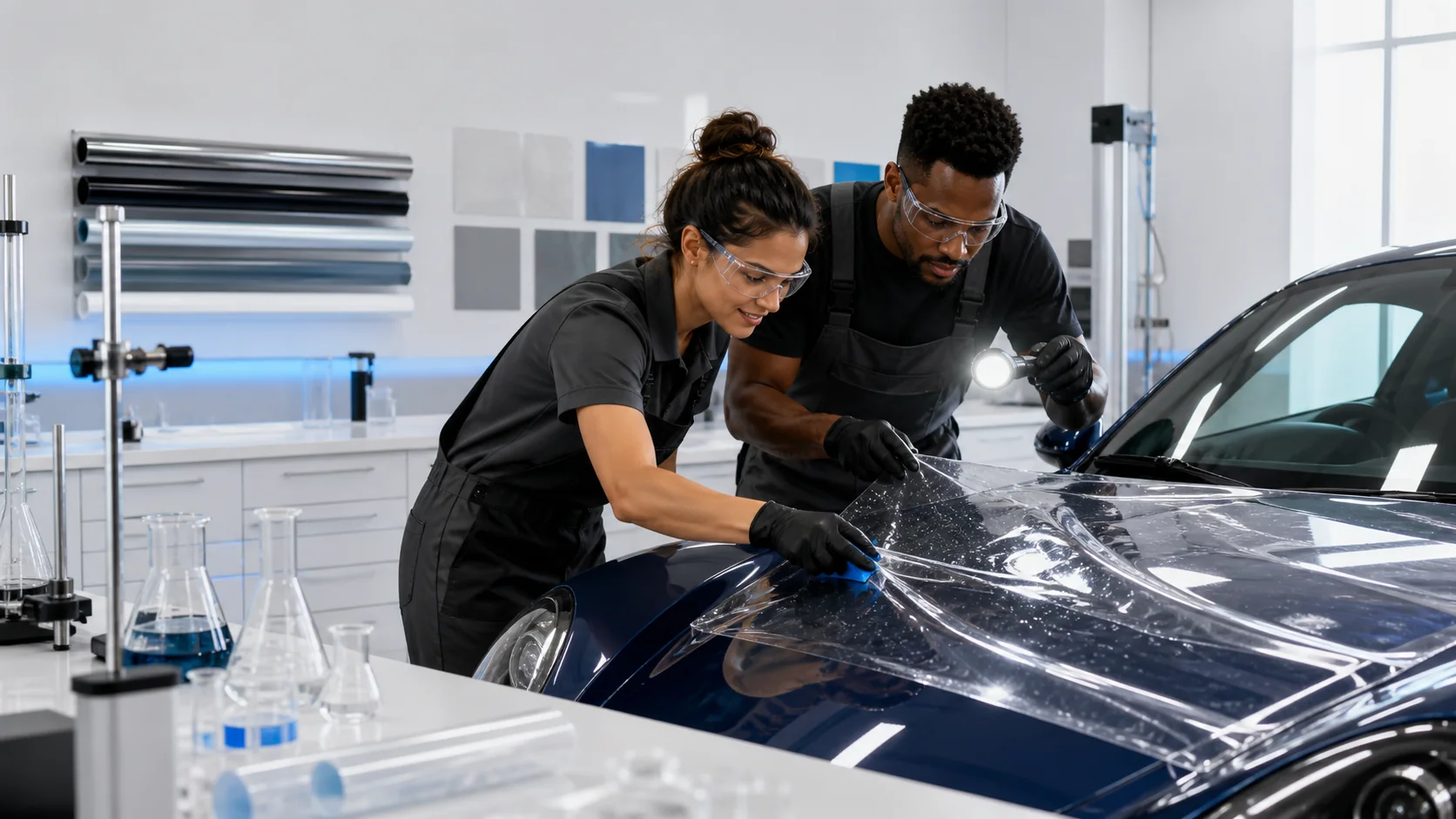
Here is a small piece of industry news that says something surprisingly large. On August 24, The Sign Show announced a dedicated PPF Knowledge Hub with live demonstrations for vehicle-graphics businesses. Earlier this summer, Ceramic Pro promoted an AI-powered visualizer that lets customers preview tint and more than 150 color-PPF finishes before contacting a dealer. One development is physical and one is digital, but both point in the same direction: the film roll is no longer the whole product.
Why I find the “knowledge hub” more interesting than another color launch
New colors are enjoyable, but a new learning area changes who can enter the category. Wrap and sign shops already understand surfaces, curves, trimming and customer-led styling. Their barrier is not curiosity; it is confidence. A live PPF demonstration turns an unfamiliar premium service into something observable and learnable.
That matters to manufacturers and distributors. Market growth does not come only from selling more rolls to existing PPF shops. It also comes from helping adjacent professionals add PPF without creating expensive installation failures.
The next distributor advantage will not be the longest color card. It will be the shortest distance between customer imagination and a repeatable installation.
The amusing part: the customer may “try on” 150 films before touching one
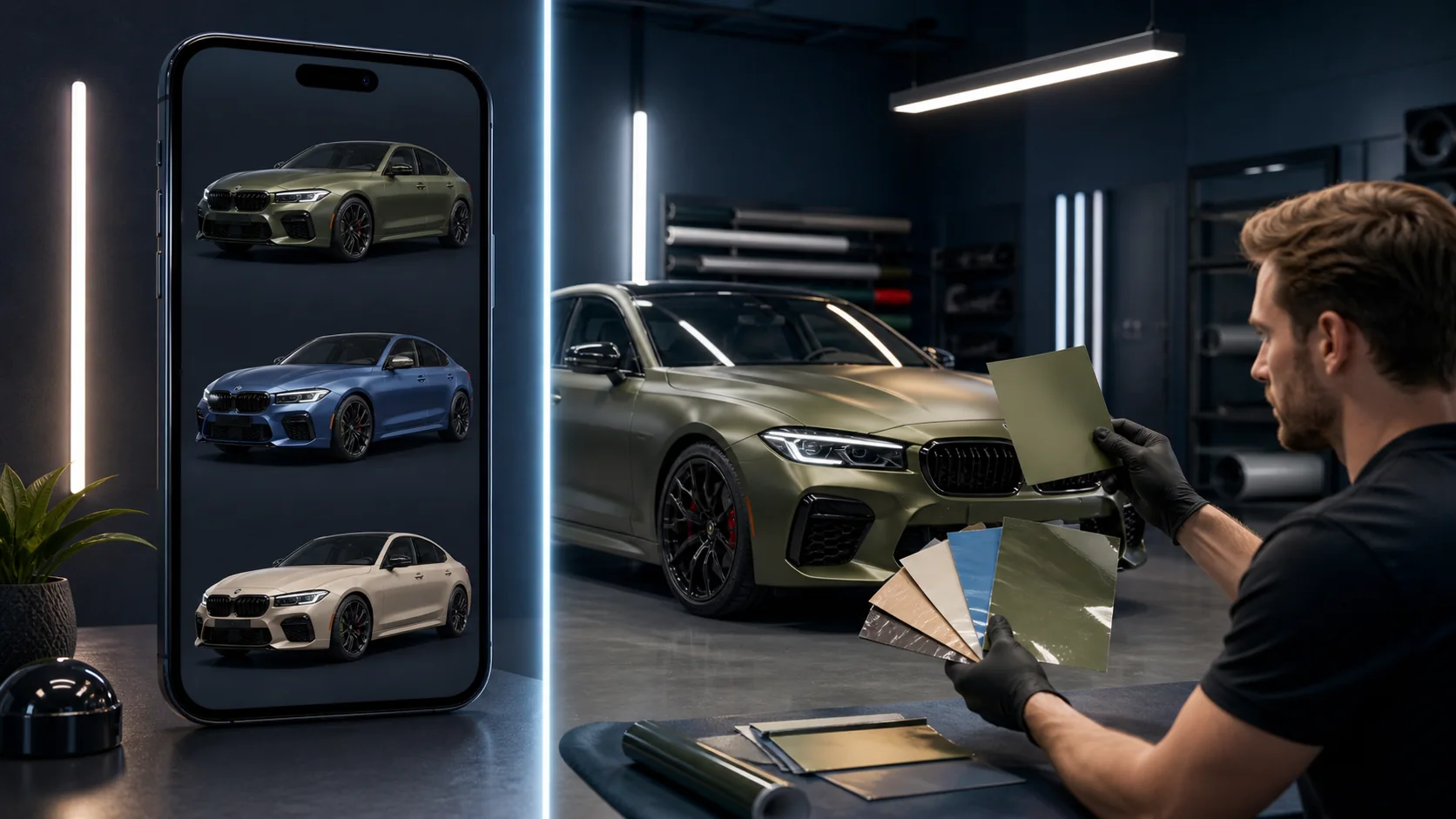
The AI visualizer is a clever sales tool because color PPF has always had an imagination problem. A small swatch cannot show how satin olive changes the personality of an entire SUV, and a customer may struggle to picture pearl blue under daylight rather than a showroom lamp. A phone can make that decision playful.
But this is where I would resist the hype. A rendering cannot prove real gloss, orange peel, adhesive marks, stretch discoloration, edge retention or batch consistency. Digital preview should generate the lead; the physical panel should close the technical argument.
What distributors should build now
- A small, installable sample system: pair color cards with hood-size or mirror-size test material.
- Short training modules: surface preparation, tack control, stretch limits, edges and post-heating should be teachable in minutes.
- Honest digital previews: show finish families and lighting changes, but state that screens cannot guarantee an exact physical color.
- A feedback loop: collect installer notes and failed-panel evidence by batch, vehicle shape and shop temperature.
- A focused starting range: six proven colors with training support can outperform sixty colors that installers do not trust.
What factories should learn from this
Factories naturally talk about TPU grade, coating lines and thickness. Those details matter, but the market experiences the product through a shop. If the installer cannot explain it, preview it, apply it and repair it confidently, a strong laboratory specification may still become a weak commercial product.
For private-label programs, I would now treat training images, application notes, sample-panel guidance and digital color assets as part of the product-development package—not decoration added after production.
My conclusion
The industry is becoming more interesting because its two ends are moving closer together. Customers can play with color on a phone; installers can learn PPF at a live demonstration; distributors can turn both moments into a structured sales process. Protection film is still a material business, but its next stage will be won by companies that package material with knowledge.
Sources: The Sign Show, “Protect new opportunities in the PPF Knowledge Hub,” August 24, 2026; SEMA, Ceramic Pro visualizer and Shift Color PPF report; and Avery Dennison's 2026 spring color release. Named-company details come from those sources. Analysis and recommendations are Shawn's opinion.