 Automotive Film
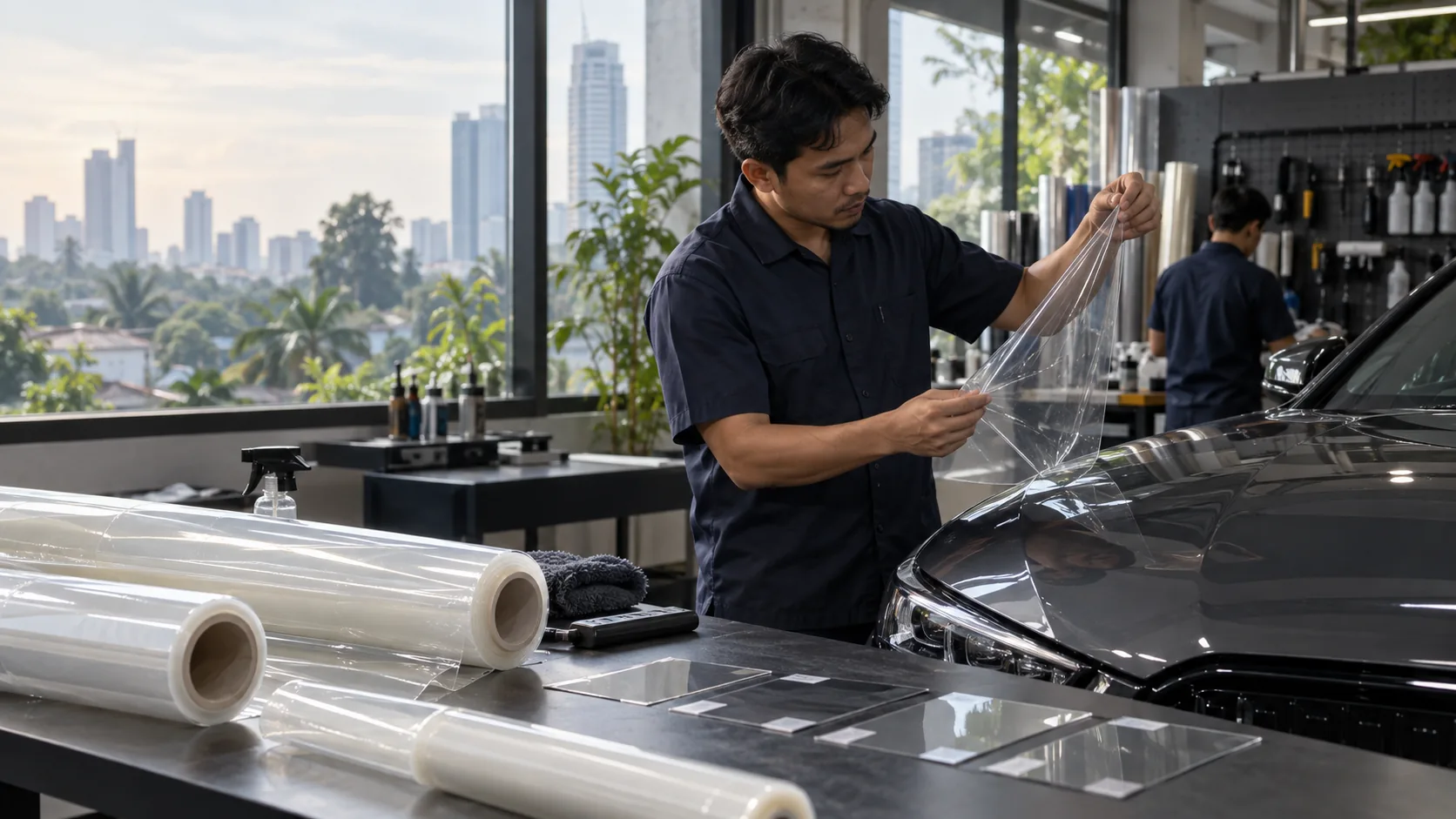
Automechanika Frankfurt closed on September 12 with more than 112,000 trade visitors from 173 countries, according to its organizer. Two weeks later, the first Automechanika Jakarta is scheduled for September 24–27. For an automotive film buyer, that sequence raises a useful question: after the introductions and product samples, what evidence will tell us whether a paint protection film belongs in a particular market?
Neither event's attendance figures prove anything about PPF demand or film performance. They do show how international the aftermarket conversation has become. My view is that the next competitive advantage is not a bigger booth or a longer color card. It is the ability to turn a global introduction into a disciplined local trial.
A sample that looks perfect under exhibition lights has not yet earned a place in a distributor's catalog.
Ask a market question, not only a specification question
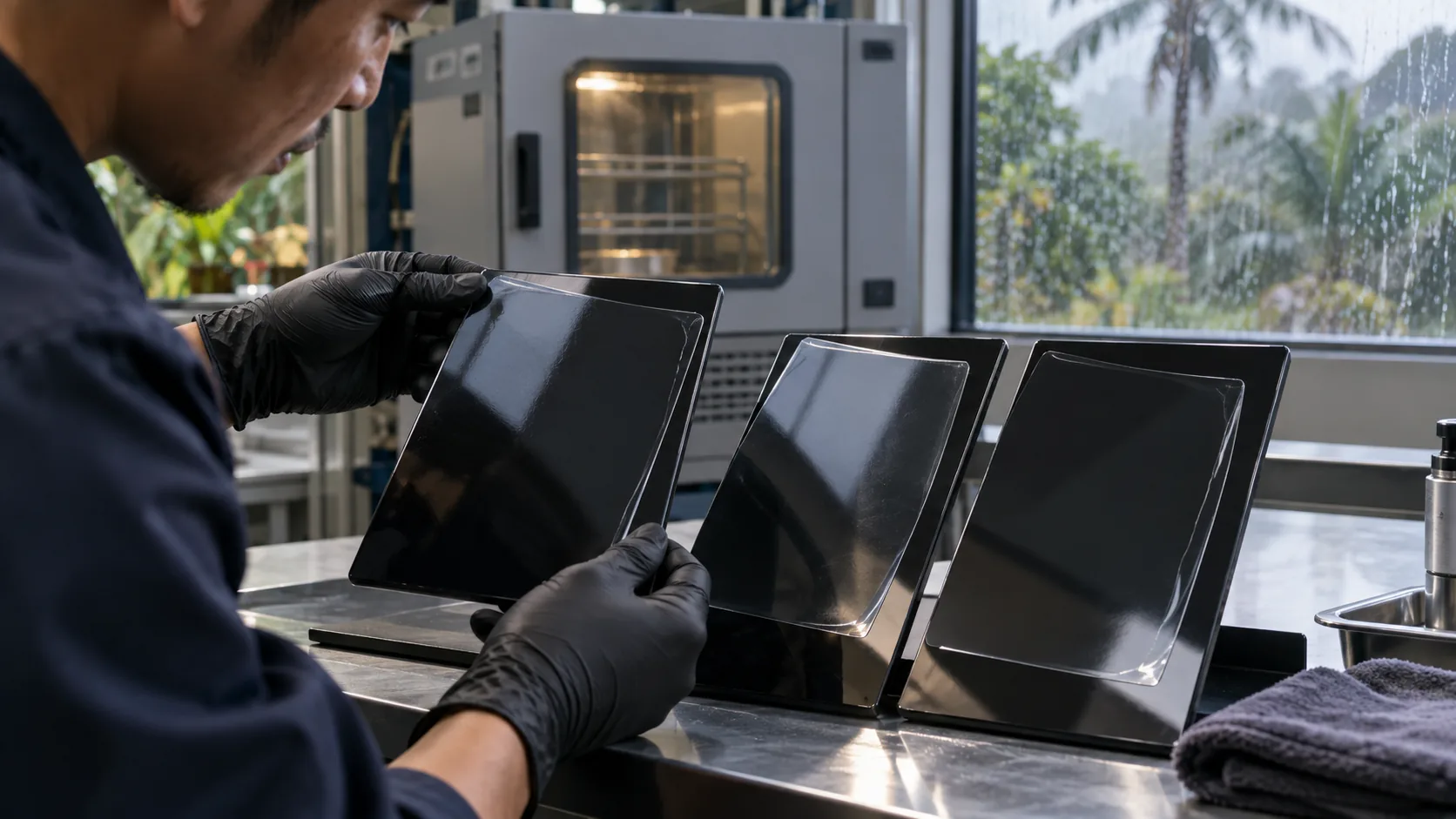
Thickness, gloss and warranty terms matter. But a distributor also needs to know how the film behaves during the installations its dealers actually perform. In a hot, humid market, start with wet-out and adhesive handling in the local workshop, then inspect edges and appearance after realistic heat, rain and wash cycles. In a cooler or drier market, use a different evaluation plan. These are procurement checks, not claims that one climate automatically makes a film fail.
For color PPF, include color consistency across rolls and panels. For clear TPU PPF, document clarity, stretch response, edge finish and maintenance instructions. Photograph the same panel under daylight and workshop light. Keep the batch number with each sample so a later production order can be compared with what was approved.
Three things I would take home from a trade show
- A short list of comparable samples. Ask each supplier for the same finish and intended application, plus technical details and batch identification.
- A local installer trial. Have more than one installer evaluate handling, repositioning, edge finishing and rework on the same vehicle geometry.
- A written decision record. Define what counts as acceptable appearance, installation time, customer aftercare and post-install inspection before making a bulk-order decision.
If a claim such as weather resistance or self-healing is important to the sales story, request the supplier's test method and conditions. Then verify what matters in your own sales environment. A marketing claim and a local field result are different kinds of evidence.
What a factory should do differently
For us as a manufacturer, the useful response is not to claim that one film fits every country. It is to help a distributor build a repeatable sample process: stable specifications, traceable batches, honest application guidance and clear packaging or private-label requirements. If a sample fails an agreed criterion, record it and adjust the selection. That feedback is more valuable than an impressive launch photograph.
Jakarta's new fair is an opportunity to meet partners, not proof that every PPF line will sell in Indonesia. Frankfurt's large attendance is a sign of broad aftermarket activity, not a forecast for our category. The practical bridge between the two is local proof—made in an installer's bay, on a real panel, with a written result.
Event sources: Messe Frankfurt, Automechanika Frankfurt 2026 final report, September 12; Messe Frankfurt, upcoming Automechanika Jakarta announcement, September 17. All PPF testing recommendations and market interpretations above are Shawn's opinion, not claims made by the event organizers. This article is not a certification or product-performance guarantee.