 Automotive Film
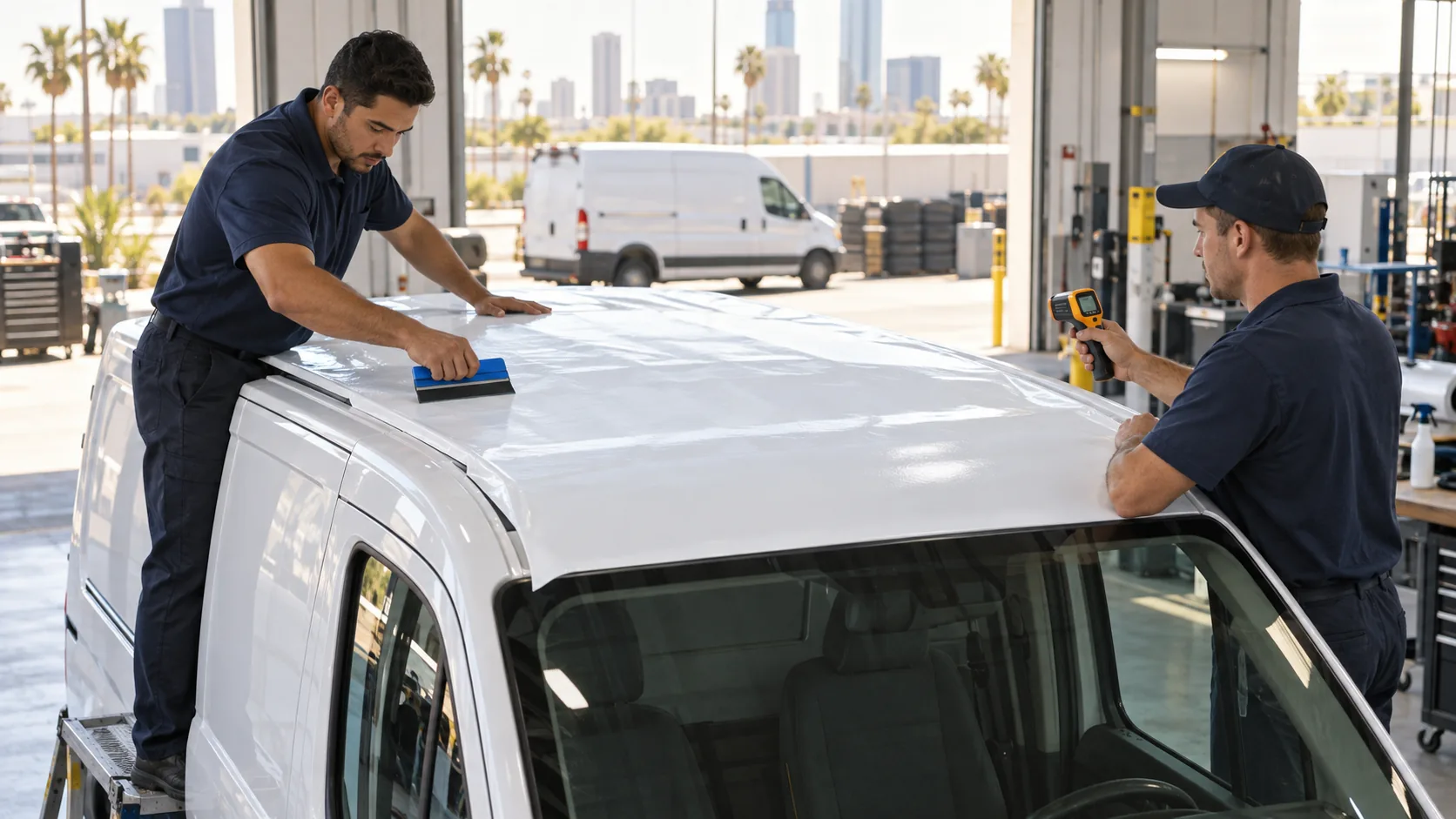
On September 2, 3M announced a reflective film designed for the roofs of last-mile delivery vehicles, refrigerated trucks, trailers and passenger rail vehicles. The company says its Cooling Film reflects more than 85% of solar radiation and can reduce interior temperature by up to 10°F, depending on the application.
Those are manufacturer claims for a specific product—not results that should be copied onto another film. What interests me is the business model behind the launch. This film is not being sold mainly through gloss, color or invisible protection. It is being positioned around a measurable operational problem: heat.
The next valuable automotive film may be the one whose result a fleet manager can record—not merely the one a customer can admire.
Automotive film is becoming a problem-solving category
PPF protects paint. Window film can manage light, heat and privacy. Wrap changes appearance and communicates a brand. A roof-applied cooling film adds another surface and another buyer: the fleet operator who cares about cabin conditions, cooling demand, downtime and service life.
This does not mean PPF distributors should immediately add every new functional film. It means the category is expanding beyond retail vehicle styling. The sales conversation can move from “What finish do you want?” to “What operating condition are you trying to improve?” That question is much more useful for commercial customers.
Claims need a test plan
A headline number such as “up to 10°F cooler” is not a universal promise. Vehicle color, roof construction, insulation, weather, route, dwell time, air-conditioning use and measurement location can all change the result. A serious distributor should retain the manufacturer's conditions and run a controlled local comparison before building a customer proposal.
- Use comparable vehicles: record roof color, body type, insulation and load condition.
- Measure the same locations: compare roof-surface and interior temperatures at consistent times.
- Record weather and route: sunlight, ambient temperature, parking duration and driving pattern matter.
- Track installation time: operational value includes how quickly a vehicle can return to service.
- Inspect over time: monitor edges, cleaning, appearance and removal expectations—not only day-one temperature.
What PPF sellers should learn from this
PPF marketing often lists self-healing, hydrophobicity, gloss and warranty length. Those features matter, but professional buyers increasingly ask what they mean in daily work. Can installers finish edges consistently? Does the approved production roll match the sample? How much rework occurs? What aftercare reduces complaints? These are measurable outcomes too.
The lesson is not to invent laboratory language. It is to connect each claim with a method, condition and record. If a distributor cannot explain how a benefit was tested, the claim is difficult to train, difficult to sell responsibly and difficult to defend.
A broader opportunity—with disciplined boundaries
Functional films may open new conversations with delivery fleets, cold-chain operators, public transport and commercial-vehicle upfitters. But each application has its own substrate, maintenance, regulation and warranty requirements. A paint-protection film should not be presented as a roof-cooling product merely because both arrive on a roll.
That boundary is exactly why the 3M launch is useful industry news. It shows how a mature materials company defines the application, names the intended vehicles, publishes quantified claims and supports them with a specific warranty. Whether a distributor sells that product or not, the structure of the offer is worth studying.
Source: 3M, “New 3M Cooling Film helps fleet and rail operators keep cabin interiors cooler and improve efficiency,” September 2, 2026. Product figures in this article are attributed to 3M and have not been independently verified by KAVRON. All industry interpretation and distributor recommendations are Shawn's opinion. KAVRON does not claim that its PPF products provide the cooling performance described in the 3M announcement.