 Automotive Film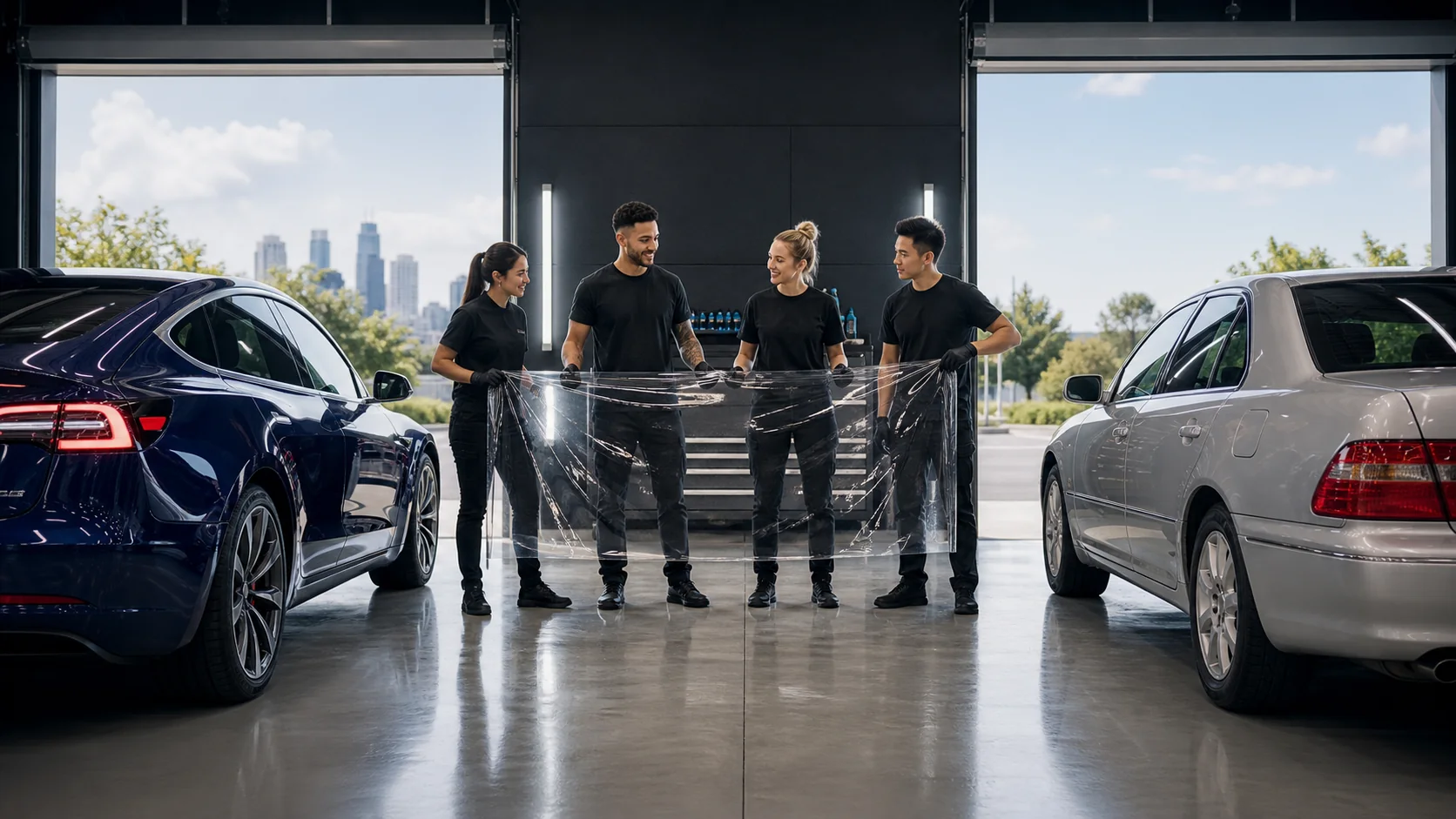
SEMA's August 27 preview of its 2026 Show included a useful number: the repair-and-refinishing-related U.S. aftermarket represents roughly $9 billion in annual consumer spending. The category described by SEMA is broader than protective film—it includes appearance products, wraps, window tint, lighting, paint and refinishing materials. That distinction matters. The interesting story is not that PPF alone is a $9 billion market. It is that PPF now sits inside a much larger customer decision about protecting, repairing and restyling a vehicle.
The same shop is meeting two opposite cars
One customer arrives in a newly purchased, increasingly expensive vehicle and wants the original paint protected before the first road trip. Another arrives in a reliable older car that will remain in service for years and wants it to look better, feel cooler and avoid further wear. Their budgets and motivations differ, but both can need paint protection film, window tint, trim protection or selective appearance upgrades.
This is why I think the “new car only” description of PPF is becoming too narrow. Full-body PPF still makes sense for premium new vehicles, but partial coverage, windshield protection, window film and targeted restyling can make sense across a wider vehicle-age range.
The opportunity is not one perfect roll for every car. It is a service ladder that gives different cars a sensible next step.
What a practical service ladder can look like
- Essential protection: impact zones, door cups, luggage ledges and other high-contact areas.
- Front-end protection: bumper, hood, fenders and mirrors for road-debris exposure.
- Comfort and preservation: compliant automotive window film selected by VLT and local rules.
- Appearance refresh: gloss, matte or color PPF on selected panels, paired with paint preparation.
- Premium preservation: full-vehicle PPF with documented inspection, edge finishing and aftercare.
Turnaround time is becoming part of the product
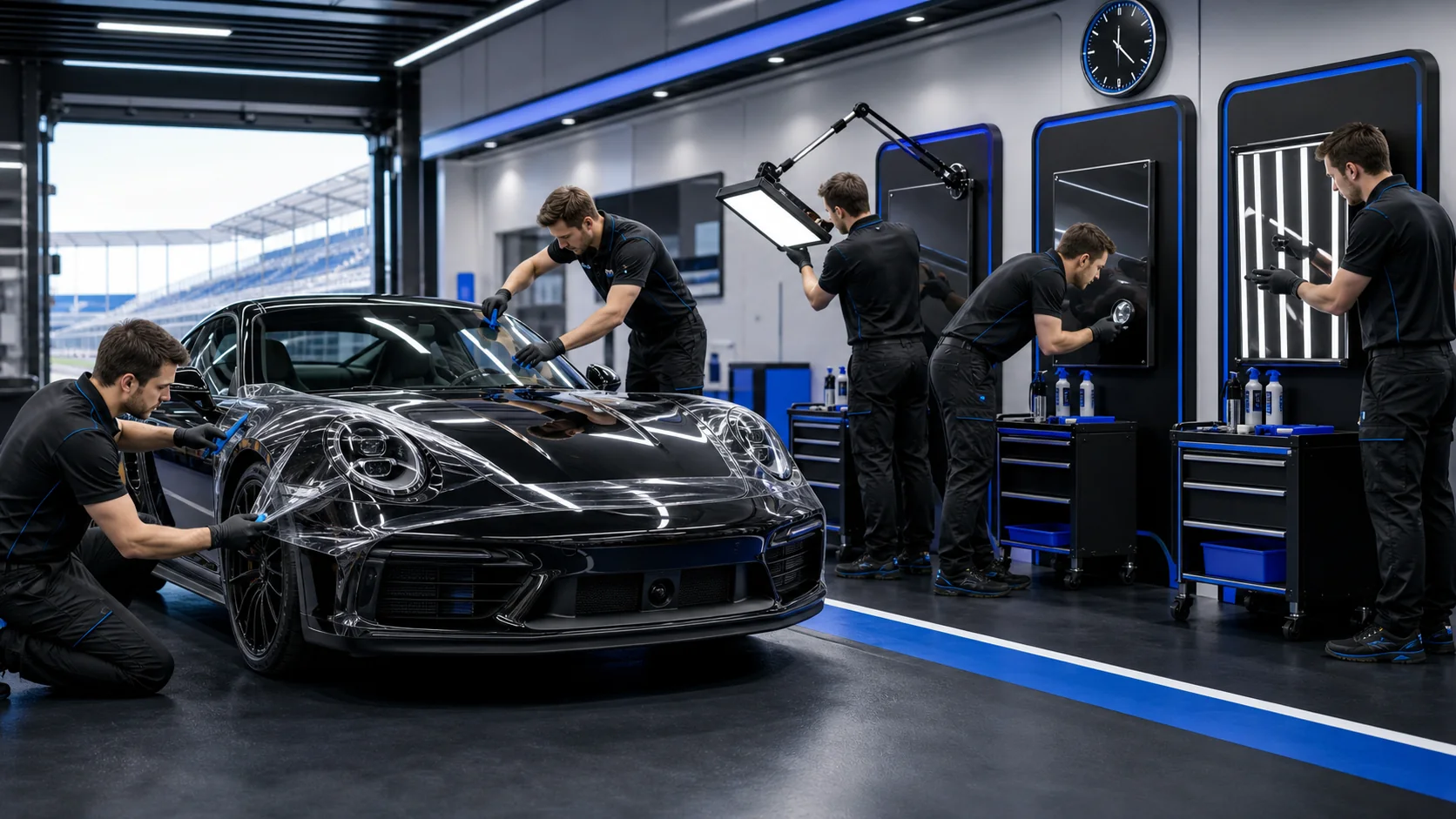
SEMA's preview emphasizes efficiency, quality and turnaround. I agree with that order only if quality is never removed from the middle. A shop that finishes faster by skipping preparation, rushing compound curves or ignoring edge contamination is not more efficient; it is simply moving warranty work into the future.
Real efficiency comes from repeatable panel patterns, clean work zones, clearly labeled materials, trained task handoffs and inspection gates. The fastest installer is not necessarily the person whose hands move fastest. It is the team that avoids rework.
What distributors should ask their factory
- Can the supplier support clear PPF, color PPF and window film as a coherent range rather than unrelated rolls?
- Are sample sizes large enough for realistic panel and edge testing?
- Are installation temperature, stretch and post-heating limits documented?
- Can batches be traced when a shop reports adhesive, gloss or color variation?
- Does the packaging help technicians identify the correct roll quickly?
My conclusion
The latest SEMA signal is encouraging, but market size is not a business plan. The winners will translate broad consumer spending into clear service choices, disciplined installation and reliable materials. New cars create protection demand. Older cars create preservation and refresh demand. The smart PPF distributor can serve both—without pretending they are the same customer.
Sources: SEMA, “Repair and Restyling Innovations Build Momentum for the 2026 SEMA Show,” August 27, 2026, and THE SHOP, “Building a Case for Offering Paint Protection Film Installations,” August 10, 2026. The $9 billion figure refers to the broader repair-and-refinishing-related aftermarket described by SEMA, not PPF alone. Analysis and recommendations are Shawn's opinion.